SCED 303h Blog

This blog is connected to SCED 303h: Teaching History at the Middle and Secondary Level at Northeastern Illinois University. Here students and their professor share reflections and have conversations regarding issues in Social Studies Education.


Sunday, April 30, 2006

News4Jax.com - News 4 Georgia - Glynn Educator Aims To Use Southern Charm To Improve Student Performance


What ever happened to parenting? Do Georgia students really need school to teach them manners? I don't know about you, but I find it amazing that schools feel the need to take on the role of parents because the parents have apparently failed so miserably to set limits for their children. I sound like some kind of a conservative nut case here but I don't think schools are in the "class" business. When Superintendent Bull announced that "class" is as important as chemistry or calculus he let the cat out of the bag. Just what does the superintendent mean by "class?" How is it to be defined? Is there a single offering for "class" or can there be multiple approaches to "class" in his lexicon? In this case, "class" sounds to me to be a lot like standards in a one size fits all model.

"Public education in Glynn County may soon be made up of reading, writing and respect, with manners possibly joining the curriculum beginning in the next school year.

"Superintendent Michael Bull said class is as important as chemistry or calculus, and he is pushing for an elective course for sixth-graders that would include topics like politeness, communication and respect.

"A two-week session on etiquette is already in session at Frederica Academy. The private school on St. Simons Island addresses good manners, making introductions, writing thank-you notes and occasion-appropriate clothing."

News4Jax.com - News 4 Georgia - Glynn Educator Aims To Use Southern Charm To Improve Student Performance

Zoundry


Technorati : , , , , , , , , , ,

Wednesday, April 26, 2006

Kennedy Assassination Newspaper Articles Archive


I just discovered this web site. While it attests to being the Kennedy Assassination Newspaper Articles Archive, the site, in reality, covers a wide range of searches for newspaper articles that can be used as primary source documents for units in historical or social studies research or inquiry projects. Check it out and see if you can use this one.

Zoundry

Answers.com


Technorati : , , , , , , , , , , ,

Tuesday, April 25, 2006

American Immigration Law Foundation (AILF): Teacher's Corner

I just discovered this web site and I strongly suggest that you all take a look at what it has to offer. The AILF Teacher's Corner provides a number of resources, including a grant worth from $500 to $1,000 for teachers K-12. There are lesson plans and more for you to tweak to fit your own classrooms. A great web resource.


Technorati : , , , , , , , , , , , ,

Monday, April 10, 2006

The End of History?

In commenting on Hegel, Collingwood argues:


History must end with the present, because nothing else has happened. But this does not mean glorifying the present or thinking that future progress is impossible. It only means recognizing the present as a fact and realizing that we do not know what future progress will be. As Hegel put it, the future is an object not of knowledge butof hopes and fears; and hopes and fears are not history.

Of course, another way of looking at historical thought is that the job of the historian is to make clear the teleological idea that the end of history occurs in the future and that historians must make clear the path to the future based on the developments of the past.

How do you understand the purpose of teaching history. Do we use history to explain the present or the future?

Thursday, April 06, 2006

Technology

Using technology in the classroom is an excellent way to promote active learning rather than the passive role of recipient of information transmitted strictly by a teacher. I think it is excellent that you are incorporating a Webblog in your future classrooms.  My only concern is if it is entirely feasible to incorporate all student participation?  Access to the internet is limited to some individuals.

Educator Templates: Your FREE education template directory

Educator Templates: Your FREE education template directory is an awesome web site. Many FREE teacher tools available just for the asking. I strongly urge you to take a look. There is never a reason to reinvent the wheel.

Zoundry

Technorati : , , , , ,

Tuesday, April 04, 2006

U.S. Science Lessons Focus More on Activities, Less on Content, Study Shows


The National Center for Educational Statistics, part of the Department of Education just released a the video study Trends in International Mathematics and Science Study in which they report that U.S. Science Lessons Focus More on Activities, Less on Content, Study Shows. In part the Department of Education states:
In the United States, lessons kept students busy on a variety of activities such as hands-on work, small group discussions, and other "motivational" activities such as games, role-playing, physical movement, and puzzles. The various activities, however, were not typically connected to the development of science content ideas. More than a quarter of the U.S. lessons were focused almost completely on carrying out the activity as opposed to learning a specific idea.
My question is simply this, if teachers are focusing on hands-on scientific activities why are the 8th grade students not learning specific ideas. If an activity is authentic then it focuses on value to the student, academic rigor, and has an audience beyond that of the teacher. Perhaps the activities viewed by the Department of Education researchers were not rigorous, or lacked value to the student, or had the teacher as the sole audience, and if they were not that is something that needs to be addressed. But, the 2003 TIMSS findings state clearly that:
In 2003, U.S. eighth-graders exceeded the international average in mathematics and science. U.S. eighth-graders outperformed their peers in 25 countries in mathematics and 32 countries in science.
According to the table below, the international average score of 473 is far lower than the US average science score in 8th Grade of 527. The fact that only 8 countries scored higher than the US on average score with the highest score only 51 points greater than the US average score is significant but not for the reasons you might think. There are many explanations for such a differential including the basic fact that the US tests a more diverse population than do any of the other nations listed on this survey. This means that the US mean score should be slightly lower than the scores of other countries that test a less diverse population. The US also tests far more of its population per 100 students than the other nations listed so that the universe of testing populations are not comparable. It is as if apples are being compared to oranges.


The problem I have with the way the government reports these data is that it is made to appear as if there is a crisis in American education that simply does not exist. See David Berliner's book, The Manufactured Crisis for a detailed account of how the statistics of studies like the TIMSS are made to appear as if a crisis mode exists when, in fact, there is a great deal to be pleased about in the American educational system. It is easy to lie with statistics, to mislead the public. I am not suprised that the Department of Education misrepresents their findings in headline grabbing fashion.

Zoundry

Technorati : , , , , ,

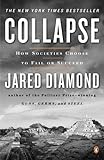
Jared Diamond's Collapse: How Societies Choose to Fail or Succeed

Collapse : How Societies Choose to Fail or Succeed

From time to time I will recommend books that are both interesting and can add to your social studies content knowledge. Collapse is one of these books. I personally found the book to be a fascinating account of the possible reasons for the collapse of societies. Read what Jennifer Buckendorff has to say about this book.

Jared Diamond's Collapse: How Societies Choose to Fail or Succeed is the glass-half-empty follow-up to his Pulitzer Prize-winning Guns, Germs, and Steel. While Guns, Germs, and Steel explained the geographic and environmental reasons why some human populations have flourished, Collapse uses the same factors to examine why ancient societies, including the Anasazi of the American Southwest and the Viking colonies of Greenland, as well as modern ones such as Rwanda, have fallen apart. Not every collapse has an environmental origin, but an eco-meltdown is often the main catalyst, he argues, particularly when combined with society's response to (or disregard for) the coming disaster. Still, right from the outset of Collapse, the author makes clear that this is not a mere environmentalist's diatribe. He begins by setting the book's main question in the small communities of present-day Montana as they face a decline in living standards and a depletion of natural resources. Once-vital mines now leak toxins into the soil, while prion diseases infect some deer and elk and older hydroelectric dams have become decrepit. On all these issues, and particularly with the hot-button topic of logging and wildfires, Diamond writes with equanimity.

Because he's addressing such significant issues within a vast span of time, Diamond can occasionally speak too briefly and assume too much, and at times his shorthand remarks may cause careful readers to raise an eyebrow. But in general, Diamond provides fine and well-reasoned historical examples, making the case that many times, economic and environmental concerns are one and the same. With Collapse, Diamond hopes to jog our collective memory to keep us from falling for false analogies or forgetting prior experiences, and thereby save us from potential devastations to come. While it might seem a stretch to use medieval Greenland and the Maya to convince a skeptic about the seriousness of global warming, it's exactly this type of cross-referencing that makes Collapse so compelling. --Jennifer Buckendorff

Collapse : How Societies Choose to Fail or Succeed

Technorati : , , , ,

Spellings Praises House Commitment to Education, Competitiveness

When Margaret Spellings told Congress, "

When Margaret Spellings told Congress, " To be a global economic leader, America must remain an educational leader," she served to emphasize all that I have been ranting about for the past few days Spellings Praises House Commitment to Education, Competitiveness. When Spellings makes the explicit connection between economics and education she diminishes the underlying reason for educating children, to develop people who think critically in order to preserve and defend democratic principles. One of the things President Bush gets right is that democracies tend to prosper while totalitarian states tend not to do so. So, one might argue that prosperity is an intended consequence of democracy. If this is the case, then it is unwise to think that one educates for economic gain and leadership. If one truly wants to maintain a position of economic leadership in the world, then, it stands to reason that one would be concerned about educating young people how and when to defend democracy. The price of liberty is not cheap but if one loses the incentive for liberty then liberty will not prosper. Margaret Spellings must know that.


Monday, April 03, 2006

Isn't This A Sign of Our Times.

So it seems that a doctor is marketing a device to help relieve test anxiety. The Story, at http://www.prweb.com/releases/2006510/4/prweb365646.htm focuses on a silent alarm time management system. Nothing here about what one knows, just how to efficiently manage time so that one won't be so nervous about taking the high-stakes test. Something seems terribly wrong about this whole idea. This is symptomatic of our times where testing is far more important than knowing. It also recognizes a fact that among young people in our country there is a great deal of unnecessary stress related to test taking. When will it end?


Technorati : , ,
Del.icio.us : , ,
Ice Rocket : , ,
Flickr : , ,
Buzznet : , ,
43 Things : , ,

Saturday, April 01, 2006

National Lewis & Clark Bicentennial Commemoration - walk with them and see what you discover...

National Lewis & Clark Bicentennial Commemoration - walk with them and see what you discover...
Another great resource for teaching history in the classroom. Give it a look.